
Hiring across multiple locations adds complexity to the screening process, especially when records are maintained differently from one county to another. Each jurisdiction follows its own court procedures, updated schedules, and public-access rules, which means information may appear quickly in some locations and more slowly in others.
For employers managing hiring activity across several states or regions, these differences can make it harder to maintain steady, predictable screening steps. Broader searches alone may not capture all county-level details, since most case information originates and remains at the local court.
County-level criminal searches help multi-location employers work with clear, jurisdiction-specific information from the source. This supports internal processes by offering consistent, traceable record details across all sites.
This blog explains how county-level searches fit into multi-location hiring workflows, the challenges they help address, and how they contribute to a more uniform and dependable review process across distributed teams.
What is Multi-Jurisdiction Complexity?
Multi-location employers work across counties that often follow different court structures and public-access practices. Each jurisdiction maintains its own systems, schedules, and methods for recording and updating information. Because criminal records are not stored in a single, centralized source, the details available in one county may differ in timing or format from those available in another.
These variations become more noticeable when hiring teams review candidates across several states or regions. Depending on one type of search or assuming that broader checks will include every relevant record can lead to uneven screening outcomes.
Common differences across counties include:
- Record Access Methods: Some counties use digital indexes, while others require in-person clerk assistance.
- Update Schedules: Certain jurisdictions refresh their systems daily, whereas others update records less frequently.
- Data Format: Case numbering, naming conventions, and charge descriptions differ from county to county.
- Participation in Wider Data Sources: Not all counties provide regular updates to state repositories or other aggregated systems.
For multi-location employers, these differences can make screening timelines less predictable and create variations in the information returned from one location to another. County-level criminal searches help address this by pulling records directly from the jurisdiction where they originate, giving businesses clearer insight into local court activity regardless of how each county structures its system.
Risks for Multi-Location Employers Without County-Level Screening
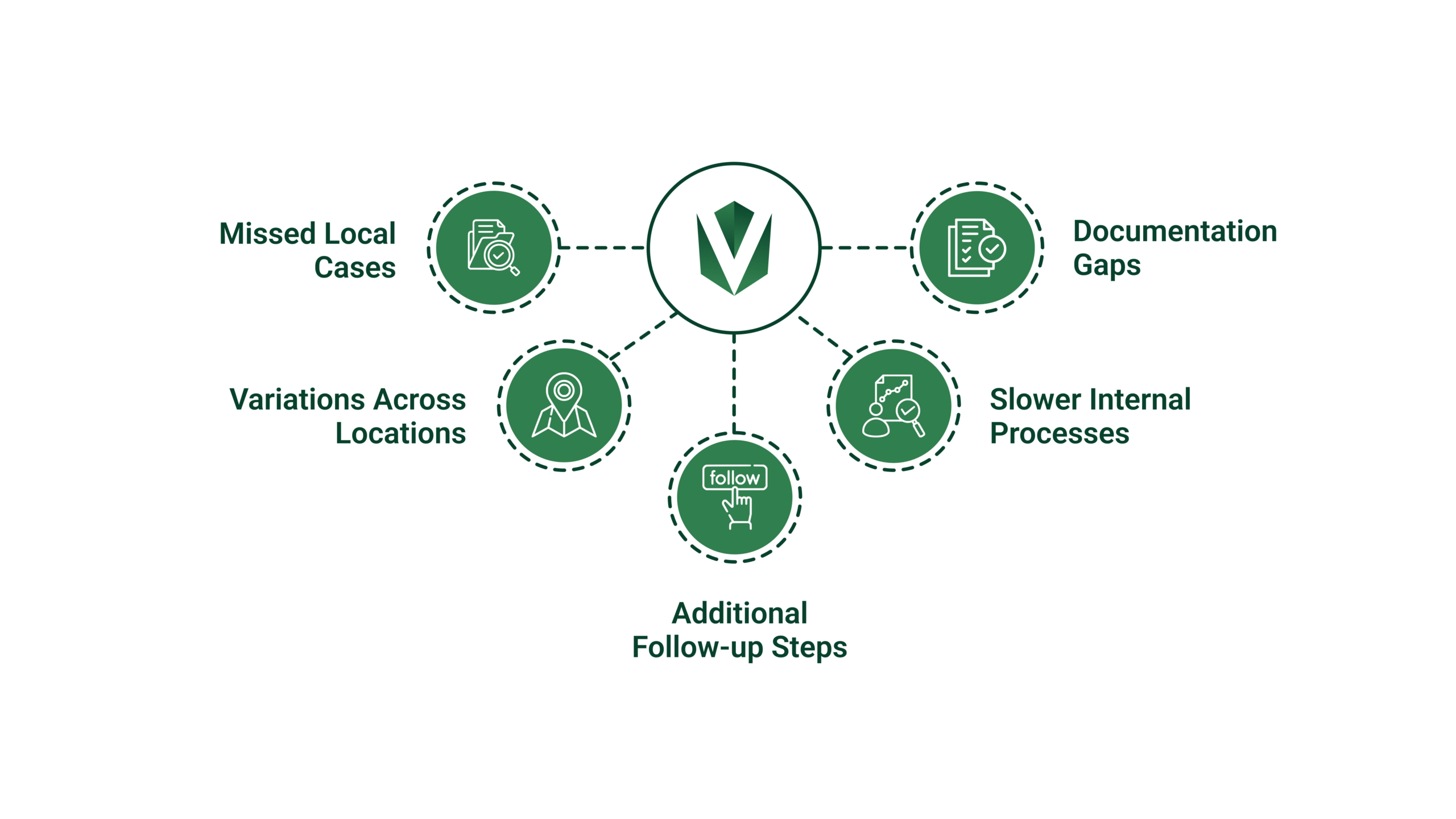
When screening spans multiple counties or states, relying solely on broader searches can result in gaps in the information available to hiring teams. Multi-location operations often involve higher volumes of candidates and varying timelines across sites, which can make those gaps more noticeable, leading to hiring risks. Without county-level checks, important jurisdiction-specific details may be harder to identify during internal review processes.
Common challenges include:
- Missed Local Cases: Newly filed or county-level cases may not appear in certain aggregated sources right away, limiting the visibility of recent activity recorded at the local court.
- Variations Across Locations: One site may receive more current information than another depending on how quickly each county updates its systems, which can lead to inconsistent results across regions.
- Additional Follow-up Steps: Some broader searches still require confirmation at the county courthouse. Without county-level checks upfront, teams may need extra steps to review or verify information.
- Slower Internal Processes: When information varies by jurisdiction, hiring timelines may differ across locations that share roles or staffing needs.
- Documentation Gaps: Without direct county-source records, it becomes more difficult for employers to maintain clear, traceable documentation that supports internal review practices.
County-level searches provide information directly from the courts where cases are recorded, helping multi-location employers work with consistent, jurisdiction-specific details across all sites.
How County-Level Checks Maintain Uniformity and Control
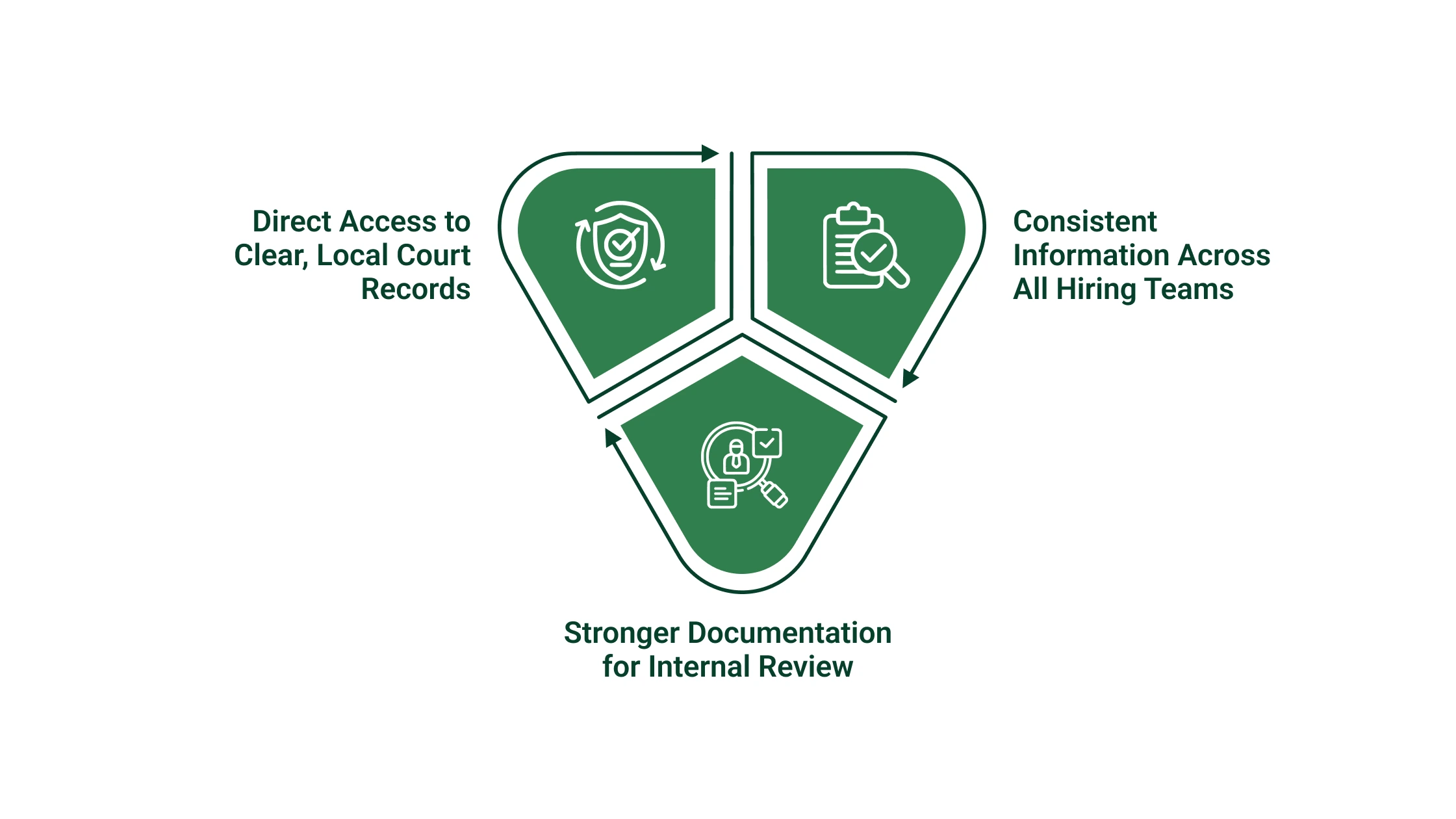
Multi-location employers often manage hiring activity across teams that operate in different regions, each with its own screening workflows and timelines. County-level criminal checks help bring consistency to this process by drawing information directly from the courts where records originate. This gives every location access to the same level of detail, regardless of how individual counties maintain or update their systems.
Direct Access to Clear, Local Court Records
County courts record, update, and maintain most criminal case information. Accessing records at this level ensures that each location reviews details as they appear in the originating jurisdiction. This helps minimize variation caused by differences in state repositories or other aggregated sources.
For employers operating across multiple regions, direct-source information offers a steady foundation for reviewing case data, supporting more predictable screening steps across locations.
Consistent Information Across All Hiring Teams
When screening methods vary by site, the information returned from each location may differ as well. County-level searches help organizations apply the same jurisdiction-specific approach everywhere by identifying the counties connected to a candidate’s history and retrieving information directly from those courts.
Following the same process across locations helps reduce inconsistencies that can arise when teams rely on different sources or levels of detail. It also supports clearer communication among hiring teams, since each report reflects information obtained through the same court-based method.
Stronger Documentation for Internal Review
Multi-location employers often maintain detailed internal records to support their hiring practices. Because county-level searches return information linked directly to the reporting court, they offer clear traceability for documentation and internal reference.
This consistency makes it easier for hiring teams to review information across sites, maintain clarity in candidate files, and ensure that all locations are working from records derived from the same type of court source.
Best Practices for Multi-Location Employers Running County Checks
For multi-location employers, the effectiveness of county-level criminal searches depends on applying a consistent approach across all sites. When every location uses the same structure to identify relevant jurisdictions and retrieve information directly from the originating courts, the screening process becomes more predictable and easier to manage.
Effective practices include:
- Using SSN Trace to Identify Jurisdictions: SSN Trace helps employers determine which counties are connected to a candidate’s address history, allowing teams to focus county-level searches on the most relevant locations.
- Applying a Consistent Screening Approach Across Locations: Organizations can choose to follow the same steps for reviewing county-level records at each site, helping ensure uniformity in how information is gathered and assessed.
- Maintaining a Clear Internal Workflow: Companies may use a single process for initiating and reviewing county-level searches, ensuring that each location follows the same sequence of actions.
- Being Aware of County-specific Factors: Some counties update records more frequently than others or follow different public-access procedures. Understanding these variations can help teams set expectations for timelines and retrieval methods.
- Conducting Searches in Parallel with Other Verifications When Appropriate: Running county-level checks alongside employment or education verifications may help keep internal hiring timelines on track.
- Ensuring Documentation Follows the Same Internal Format: Applying a standard documentation style across locations makes it easier for teams to review information and maintain consistent candidate files.
- Adjusting the Number of Counties Searched Based on Internal Policy: Companies may decide how many jurisdictions to include in their process depending on their established screening guidelines, without assessing role sensitivity or suitability.
By using a consistent, jurisdiction-focused approach, multi-location employers can maintain clearer internal workflows and ensure that each location receives comparable, court-sourced information during the hiring process.
Strengthen Multi-Location Screening with Verification Screening Solutions
County-level criminal searches play an important role in helping multi-location employers access clear, court-sourced information across all the regions where they hire. When incorporated into established internal workflows, these searches support consistent and well-documented review processes for teams operating in different counties or states.
Verification Screening Solutions provides dependable services that employers can use as part of their screening programs, including:
Our services include:
Build a more consistent, efficient, and dependable screening process across all your locations.