
Vehicles are essential to many organizations’ everyday operations, from deliveries and service appointments to employee travel between sites. At the same time, motor vehicle crashes have significant economic impacts that ripple through households, public services, and business networks.
According to a recent analysis, traffic crashes in the United States resulted in an estimated $417 billion in annual economic costs, including property damage, productivity losses, and other direct and indirect impacts.
For employers whose operations involve regular driving, reviewing Motor Vehicle Reports (MVRs) can be a useful way to maintain awareness of a driver’s state-recorded driving history over time. An MVR offers a structured view of driving activity as documented by a state motor vehicle agency, without interpreting the data or assigning judgment. Organizations can use this information to inform internal awareness and planning around driving behaviour, claims exposure, and overall fleet considerations.
In this blog, we will understand how MVR checks contribute to broader insurance-related awareness and business risk understanding, focusing on general relationships among documented driving history, organizational costs, and operational planning.
What Does an MVR Check Show?
A Motor Vehicle Report (MVR) presents state-recorded driving information as maintained by the relevant motor vehicle agency. The report is data-focused and reflects how driving history has been documented, without interpretation or judgment. While formats vary by jurisdiction, most MVRs include several common categories.
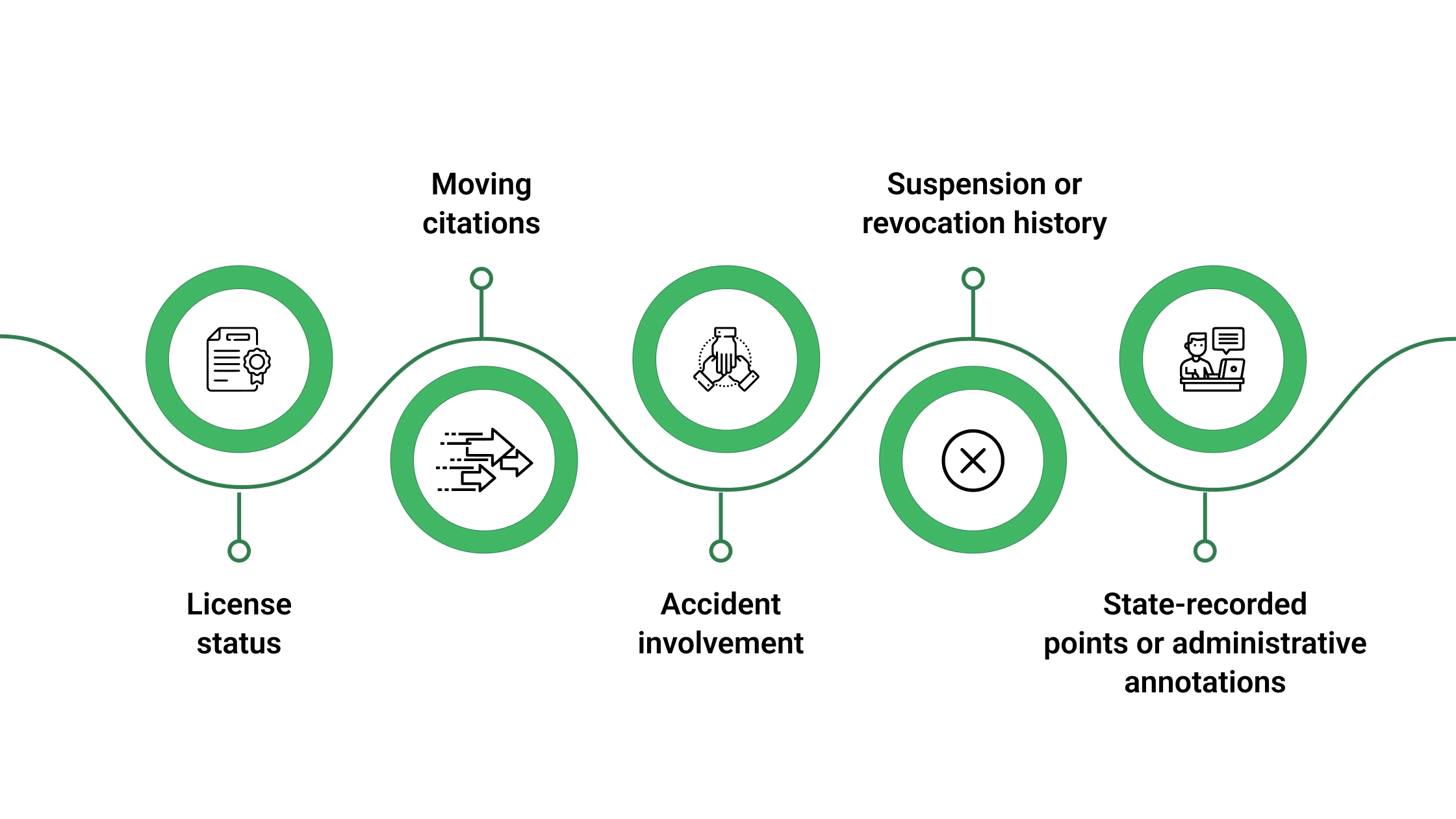
Information typically shown in an MVR includes:
- License status: Indicates whether driving privileges are valid, expired, suspended, revoked, or restricted according to state records
- Moving citations: Details such as speeding or other reportable traffic-related cases, recorded by the motor vehicle agency
- Accident involvement: Crash details are reported to and entered into the state’s motor vehicle system
- Suspension or revocation history: Outlining periods when driving privileges were affected and noting reinstatement activity where applicable
- State-recorded points or administrative annotations: In jurisdictions that use point systems or coded entries to track driving history
All of this information comes directly from state motor vehicle agencies and reflects what has been recorded at the agency level. An MVR provides a factual snapshot of documented driving activity and does not evaluate behaviour, assign meaning, or recommend outcomes.
How Driving History Relates to Fleet Exposure and Insurance
Insurance providers commonly review state-maintained driving records when evaluating coverage for business vehicles. Motor Vehicle Reports give insurers access to documented driving activity recorded by motor vehicle agencies, helping them understand historical patterns of vehicle operation.
Organizations that review the same information through MVR checks gain clearer internal awareness of how driving history may intersect with broader insurance and fleet considerations.
Elements of driving history commonly reviewed in insurance assessments include:
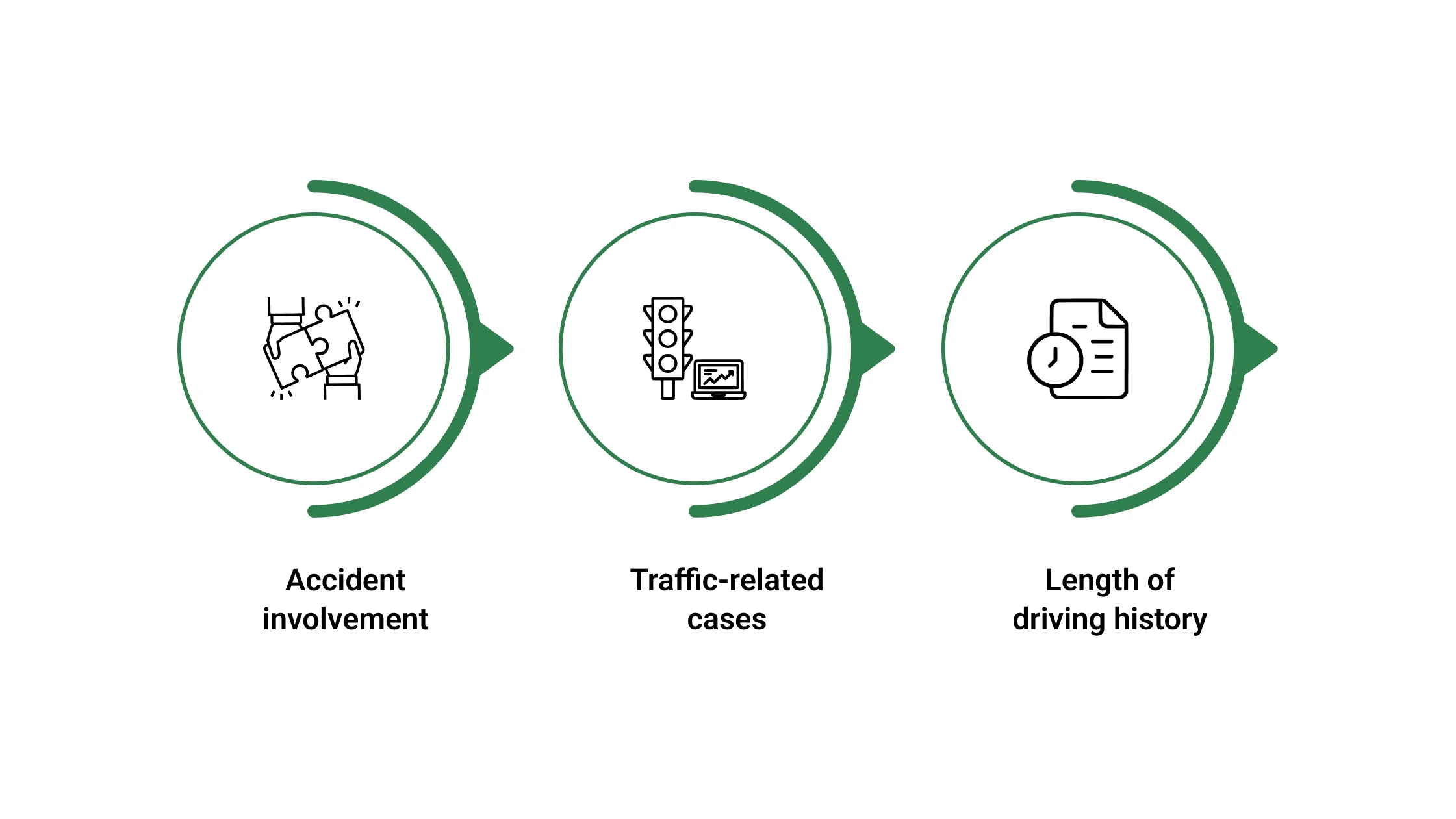
- Accident involvement: Records of prior crash activity may be reviewed to understand historical claims patterns tied to a driver or fleet. The frequency and severity of recorded accidents can influence insurers’ assessment of prior exposure.
- Traffic-related cases: State-recorded moving citations, including speeding-related cases and driving under the influence (DUI) cases, are often considered because they reflect how driving activity has been documented over time.
- Length of driving history: Insurers may also consider how long a driver has held a license, with longer driving histories providing more documented data for review than limited or recent records.
A bad driving record can have significant financial repercussions for companies. Profitability may be affected by higher premiums, which increase operating expenses. For instance, if drivers have bad records, a company with several cars may notice a sharp increase in insurance premiums. This situation underscores the importance of adhering to safe driving procedures for both the company’s financial success and its employees’ safety.
MVR Checks and Accident Awareness
Accident involvement is one of the most visible elements of driving history recorded by state motor vehicle agencies. When crashes are reported to the state and entered into the motor vehicle system, they may appear on a Motor Vehicle Report as part of the documented driving record. Reviewing this information helps organizations maintain general awareness of past accident activity connected to employee drivers, without predicting future outcomes or assigning judgment.
Motor Vehicle Reports contain historical accident data that insurers and fleet operators often review to understand how vehicles and drivers have been involved in prior incidents. Industry reporting consistently shows that prior crash involvement is one of the indicators insurers examine when evaluating claims patterns and overall exposure related to vehicle operation. This makes accident history a relevant data point for internal planning and record awareness rather than a measure of driver intent or behaviour.
Reviewing MVRs allows businesses to see how accident information is recorded at the state level and how frequently such entries appear across a group of drivers. This broader visibility can support internal conversations around vehicle use, training discussions, and operational planning tied to fleet activity. Safety organizations have noted that increased awareness of documented crash data is often part of broader efforts to understand how driving activity connects to workplace transportation outcomes.
Importantly, an MVR does not explain why an accident occurred or assess responsibility. It simply reflects what has been recorded by the motor vehicle agency.
Business Costs Potentially Affected by Driving History
Driving history does not exist in isolation. For organizations that rely on employees to operate vehicles, certain elements recorded in a Motor Vehicle Report can intersect with broader business cost considerations over time. These connections are not predictive or deterministic, but they do help explain why driving records are often reviewed as part of internal awareness and planning related to vehicle use.
In broad terms, driving history may relate to the following cost areas:
- Insurance reviews and classifications: State-recorded entries, such as multiple moving cases or periods of license suspension, may be referenced during insurance reviews, as insurers often consider documented driving activity when assessing coverage structures.
- Claims experience and premiums: Accident involvement and traffic-related cases recorded in motor vehicle agency files can be part of how prior claims history is understood, which may influence discussions around premium adjustments or renewal terms over time.
- Vehicle damage and repair planning: Documented accident history can help organizations anticipate repair needs, vehicle downtime, and maintenance planning for fleet operations, particularly when patterns emerge across multiple drivers.
MVR checks help businesses understand the potential cost touchpoints connected to driving history, without predicting outcomes or assigning judgment.
Best Practices for Using MVR Data in Risk Awareness
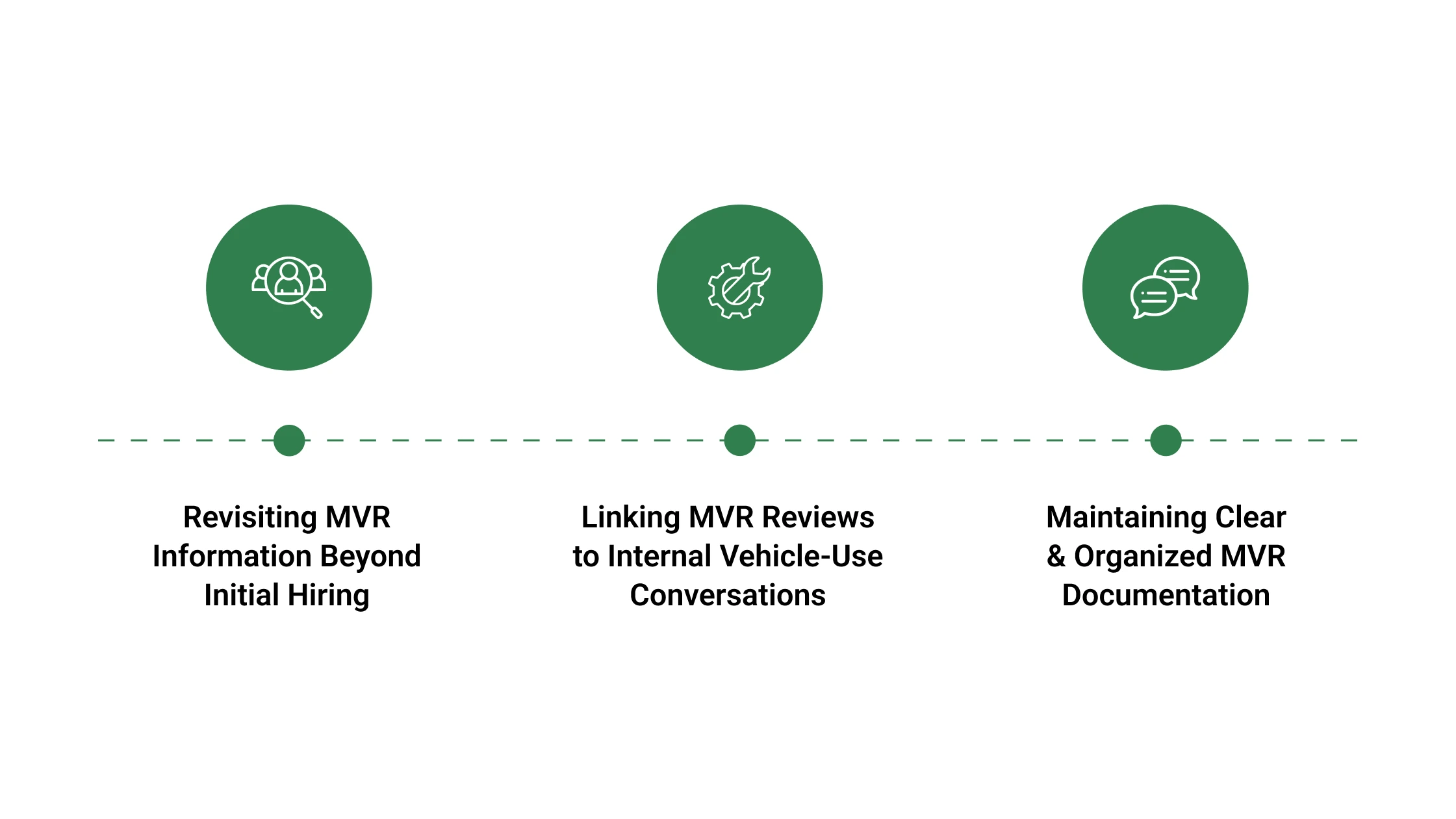
Motor Vehicle Reports can support broader organizational awareness when used as part of an ongoing internal planning approach rather than as a one-time reference point. The way MVR data is revisited, discussed, and documented over time often shapes how clearly teams understand driving activity connected to business operations. Focusing on awareness and consistency helps organizations keep driving records visible within internal processes without interpreting outcomes or drawing conclusions.
Revisiting MVR Information Beyond Initial Hiring
Some organizations choose to review Motor Vehicle Reports periodically after onboarding, particularly for roles where driving remains a regular part of the job. Periodic reviews allow teams to stay informed about changes in state-recorded driving history that may occur over time, rather than relying solely on information captured at hire. This approach supports continuity in internal awareness as employee responsibilities and driving patterns change.
Linking MVR Reviews to Internal Vehicle-Use Conversations
MVR data can also provide a reference point for internal discussions about how vehicles are used across the organization. When driving history is reviewed alongside conversations about routes, scheduling, or vehicle assignment, teams gain a clearer picture of how recorded data connects to everyday operations. These discussions remain informational and focused on operational context, not evaluation.
Maintaining Clear & Organized MVR Documentation
Consistent documentation of Motor Vehicle Report results helps ensure that information is easy to reference during future reviews. Organized records support internal alignment by making it clear when reviews occurred and what data was available at that time. This administrative clarity strengthens long-term awareness without adding interpretation or judgment to the process.
Support Insurance & Risk Awareness With MVR Checks From Verification Screening Solutions

Motor Vehicle Reports offer organizations a structured view of state-recorded driving history, helping teams understand how documented driving activity connects to broader considerations such as insurance reviews, claims experience, and vehicle planning. When used as part of a periodic review approach, MVR data supports ongoing awareness without predicting outcomes or assigning judgment.
By revisiting MVR information over time, maintaining clear documentation, and linking records to internal discussions about vehicle use, organizations can keep driving history visible within everyday operations. This awareness helps align internal planning with the same state-maintained data sources referenced in insurance and fleet contexts.
Verification Screening Solutions (VSS) provides access to court-documented and state-recorded background screening services, including:
Learn more about Motor Vehicle Reports and discuss how MVR checks fit within your organization’s existing screening approach.