
Hiring always carries risk, especially when background checks miss critical details. Many employers understand this, which is why 52% conduct criminal background checks to reduce legal liability.
But while the intent is sound, the method often falls short.
Too often, employers rely on broad databases that appear thorough on the surface but lack critical updates and granular case information. Most criminal charges are filed and processed at the county level, which means vital data may never make it into broader repositories.
In this blog, we’ll break down how county-level searches help close that gap, strengthen your due diligence process, and minimize the legal and operational risks tied to bad hires.
How Broader Checks Fall Short in Risk Management?
National and statewide criminal databases may appear to offer comprehensive coverage, but their limitations are well known in the screening industry. These databases pull from selected jurisdictions and often lag behind real-time updates for recent offenses, pending cases, or less-publicised local incidents.
Here’s where the problem arises:
- Delayed updates: Many counties don’t report data promptly, leading to gaps in statewide or national databases.
- Partial participation: Not all jurisdictions contribute records consistently, if at all.
- Data inconsistencies: Variations in how charges are classified across states can mask serious offenses.
- Record mismatches: Broader criminal databases sometimes rely on incomplete identifiers, increasing the risk of mistaken identity.
These inconsistencies introduce risk into the hiring process. Employers may assume a candidate has a clean record when, in fact, a relevant conviction sits undiscovered in a local courthouse.
To manage risk effectively, screening processes must go beyond surface-level searches and retrieve case-level information directly from the county.
How County-Level Searches Help Control Risk and Liability?
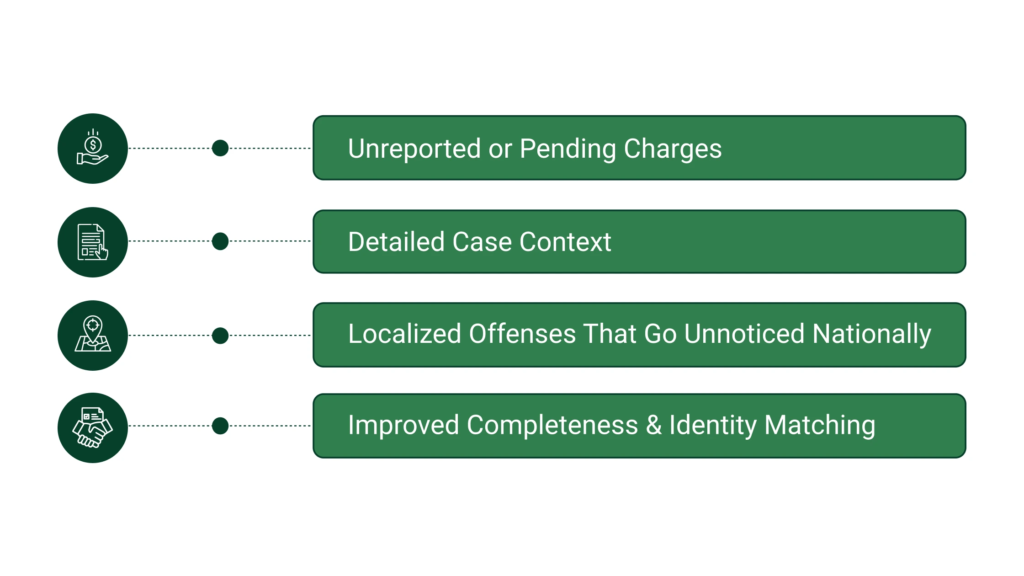
Building a dependable screening process means minimizing blind spots, especially those that could lead to legal exposure, operational disruption, or reputational damage. County-level criminal searches serve as a critical tool for achieving that clarity by providing:
1. Unreported or Pending Charges
County courts are often the first source to log criminal activity, which means they may hold case data that hasn’t yet been transmitted to state or national systems. This delay can range from days to months, depending on reporting practices.
Pending charges are especially relevant for employers because they may signal unresolved legal issues or recent behavioral patterns. For example, a national database might miss a candidate’s newly filed assault case, while a direct county-level search will show it in real time, before a hiring decision is made. For industries that deal with safety, finances, or regulated environments, missing this detail can translate into exposure that a broader search simply doesn’t catch.
2. Detailed Case Context
Surface-level information, such as “convicted” or “arrested,” often lacks the nuance required for responsible decision-making. County-level reports typically include:
- Original charges filed
- Plea agreements or charge reductions
- Final disposition of the case
- Sentencing or probation details
- Court-issued restrictions or conditions
This level of transparency helps employers understand the full story rather than reacting to partial or outdated records. It can prevent overreliance on flags from national databases, which sometimes list charges without reflecting resolutions, resulting in incomplete or unfair evaluations.
3. Localized Offenses That Go Unnoticed Nationally
National databases are not comprehensive. Many lower-level infractions, including petty theft, disorderly conduct, trespassing, or harassment, are recorded only at the county level and never submitted to broader repositories.
These offenses might not be disqualifying in every context, but when left undetected, they represent blind spots, especially in client-facing or trust-based roles. For employers operating in regulated industries or those with a duty of care toward vulnerable populations, these overlooked records can present tangible liability if something goes wrong post-hire.
4. Improved Completeness & Identity Matching
County-level searches can be scoped using verified identifiers such as full name, date of birth, and address history. This sharply reduces the chance of false positives or missed records caused by common names, alternate spellings, or alias usage.
In contrast, broader systems often depend on basic identifiers and aggregate data across jurisdictions with varying standards. This can lead to mismatched results, missed offenses under alternate names, or irrelevant flags from individuals with similar profiles. County-level targeting helps ensure the information being reviewed belongs to the candidate in question, an essential factor in reducing hiring risk.
What’s at Stake Without County-Level Checks?
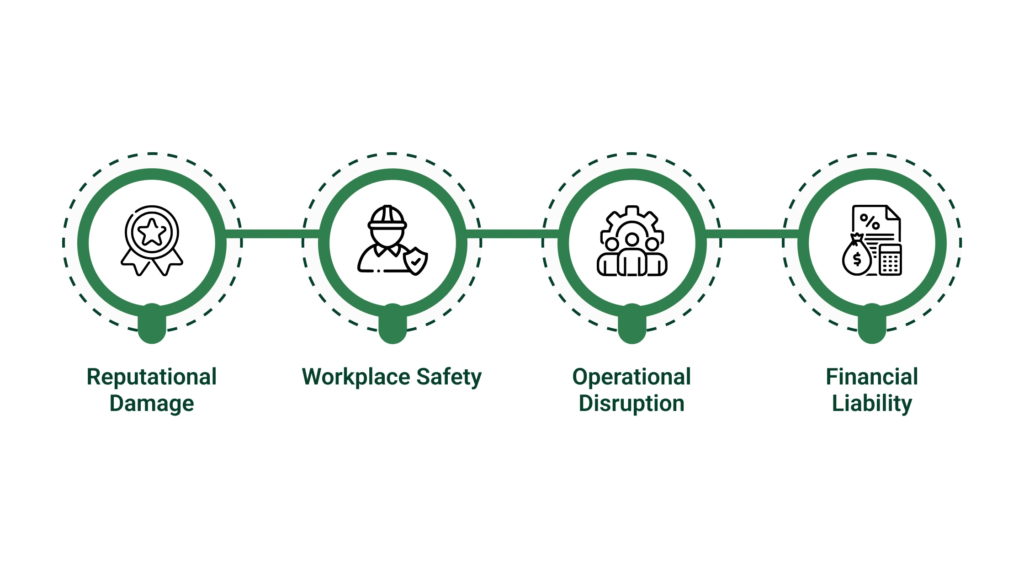
Omitting county-level criminal searches from your hiring process may save time upfront, but it often increases risk in the long run.
Reputational Damage
An overlooked criminal record can directly impact how your organization is perceived. In today’s environment of heightened transparency and rapid information sharing, public reaction to a bad hire can be swift and unforgiving.
Even when no laws are broken, reputational harm can occur if it becomes clear that basic screening steps were missed. Industries like finance, healthcare, education, and public service face exceptionally high scrutiny when trust and safety are part of their brand promise.
Common reputational risks include:
- Public backlash: Negative media attention, online reviews, or social commentary questioning the company’s hiring standards.
- Loss of stakeholder confidence: Investors, partners, or community members may reconsider their support if they believe due diligence was insufficient.
- Client attrition: Existing customers may choose competitors who demonstrate stronger risk management or hiring transparency.
- Internal morale impact: Employees who feel unsafe or undervalued may disengage or leave, affecting culture and productivity.
In reputational matters, perception often weighs as heavily as facts. When county-level searches are part of a well-structured screening process, they demonstrate a commitment to responsibility and risk awareness, qualities clients and employees notice.
Workplace Safety
Maintaining a safe work environment is a foundational responsibility for every employer, especially in roles involving vulnerable populations, high-value assets, or access to sensitive information. County-level criminal searches play a critical role in that effort.
County records often contain the earliest indicators of risk, such as pending charges, assault allegations, and theft-related convictions, that broader databases may not catch in time. Overlooking these details can create preventable safety exposures.
Examples of workplace safety risks linked to screening gaps:
- Customer-facing roles: Employees with unverified violent offenses interacting with the public
- Care settings: Staff in healthcare or education settings with disqualifying criminal histories
- Asset-sensitive environments: Unflagged financial crimes in roles with access to cash, data, or proprietary systems
- Remote or unsupervised work: Positions that require trust without day-to-day oversight
Failure to identify these risks early can lead to safety incidents, internal liability concerns, or even regulatory scrutiny, depending on the industry.
Using county-level searches helps employers respond proactively. It ensures screening isn’t based solely on partial or outdated records and reinforces the commitment to fostering a safe, secure, and accountable workplace.
Operational Disruption
Misaligned hires often lead to early turnover, increased training costs, or sudden termination, all of which disrupt workflows. In regulated environments, the stakes rise even higher. An audit revealing improper screening can result in fines or loss of licensure.
Financial Liability
Negligent hiring can open the door to costly legal and financial consequences. Employers who fail to uncover serious criminal histories during pre-employment screening may find themselves liable for harm caused by an employee’s actions on the job.
County-level criminal searches help mitigate this by offering the most accurate, jurisdiction-level view of a candidate’s criminal background. Many lawsuits linked to negligent hiring arise not because background checks were skipped entirely, but because they were too limited in scope.
How financial liability can surface from screening oversights:
- Negligent hiring claims: Employers can be held responsible if it’s proven that a proper check would have revealed a red flag
- Legal fees and settlements: Lawsuits involving workplace violence, fraud, or abuse often lead to six- or seven-figure payouts.
- Insurance complications: Failure to conduct due diligence may impact liability insurance coverage or premiums
- Reputational fallout: Public incidents tied to hiring oversights can damage investor and stakeholder confidence
County-level checks reduce these exposures by surfacing convictions, pending charges, and court outcomes that national databases often miss. This proactive layer of due diligence gives employers more substantial grounds to defend hiring decisions, while also lowering the chance of needing to.
Ultimately, when county-level searches are skipped, employers are making critical hiring decisions with incomplete data, and that’s a risk few businesses can afford.
How to Structure a Risk-Aware Screening Approach?
A well-structured screening process reduces hiring uncertainty, supports informed decisions, and lowers exposure to operational, legal, and reputational risk. County-level criminal searches serve as an essential layer within this broader framework, but they work best when part of a structured, repeatable system.
Major elements of a risk-aware screening approach include:
- Layer checks intentionally: Combine national, state-wide, and county-level checks to build depth, not just breadth.
- Prioritize role relevance: Align screening intensity with the risk level tied to the position’s responsibilities.
- Establish consistent policies: Avoid ad-hoc screening decisions; instead, apply clear, role-based background check protocols.
- Reverify when needed: Re-screen employees in high-risk roles or after significant gaps in employment.
While no screening process eliminates all risk, structured practices that include county-level searches give employers a clear advantage. They help create consistency, reduce oversight, and build a traceable method for informed hiring decisions.
Minimize Risk With County-Level Screenings From Verification Screening Solutions
Risk can’t always be eliminated, but it can be managed with better data. County-level criminal searches provide a deeper layer of visibility that helps organisations make confident, informed hiring decisions while reducing exposure to operational, financial, and legal liability.
Verification Screening Solutions supports employers with reliable, courthouse-sourced background checks designed to reduce blind spots in pre-employment screening.
Our services include:
Want to bring more structure and clarity to your hiring process?
Contact us today to explore customized screening options that fit your needs.