
93% of firms globally conduct background searches as part of their hiring process. However, only about one in five employers continues screening after the hire. That gap leaves a blind spot that many businesses can’t afford.
Initial screenings help organizations make informed hiring decisions, but employee risk doesn’t end once someone joins the team. Criminal activity, license issues, or regulatory violations can emerge months or even years after onboarding someone. Employers may miss serious developments compromising safety or brand reputation without post-hire searches.
This blog covers why post-hire background screening is becoming a strategic necessity for risk-conscious organizations. You’ll learn what they are, how they work, and what to consider when implementing an ongoing screening policy.
What is Post-Hire Background Screening?
| Post-hire background screening is a type of screening conducted after an employee has already joined the organization. These searches are performed at set intervals or triggered by specific events during an employee’s tenure. |
Depending on the role and risk level, post-hire background screening often includes criminal record updates, professional license verifications, and driving record monitoring.
The purpose isn’t to “catch” employees but to protect the business, the team, and the customers by staying aware of any new developments that could affect someone’s fitness for their role. For regulated industries or roles involving sensitive data, vulnerable populations, or financial responsibility, post-hire searches serve as a critical safeguard against evolving risk.
When is a Post-Hire Background Search Conducted?
Post-hire background screening can be carried out at various times depending on the industry and policy, but the most common scenarios include:
- Annual reviews: Many companies align background searches with performance reviews. This timing helps identify employee record changes that could influence their role or responsibilities.
- Industry-specific intervals. Specific industries require screening at defined intervals to keep employees in check.
- Promotions: Before promoting someone into a higher-responsibility role, companies often conduct a fresh screening to ensure nothing has changed since their initial hire.
- Regulated or disclosed random checks: Background screening and MVR checks may be necessary in regulated industries like transportation. However, random searches should only be conducted with explicit employee consent and proper disclosure.
Each of these touchpoints gives employers a structured way to monitor risk and protect the integrity of their workforce without creating unnecessary friction.
The Benefits of Post-Hire Screening
Ongoing screening is critical in protecting your business, clients, and reputation, especially in fast-moving, high-risk industries. These are the key advantages of making post-hire searches part of your process:
New criminal activity doesn’t stay hidden.
People’s circumstances change. An employee with a clean record at hire may face criminal charges months or even weeks later. Those developments can go unnoticed without ongoing searches, even when they directly affect job responsibilities or workplace safety.
Client safety stays front and center.
Organizations that work with vulnerable people, like children, seniors, or individuals with disabilities, can’t afford blind spots. Regular background searches help prevent people with a history of serious offenses, such as abuse, assault, or theft, from remaining in positions of trust.
Customer confidence grows.
Clients place more trust in businesses that consistently conduct due diligence. Post-hire screening sends a message that your organization holds everyone to a high standard, whether they’ve been there for five months or years. That transparency is especially important for companies handling financial data, healthcare information, or sensitive client services.
Your brand is better protected.
Employees represent the company at every level. If someone commits theft, fraud, or violence, the headlines won’t mention the department; they’ll name the brand. A consistent screening process can catch red flags early, helping you avoid reputation damage that’s hard to repair.
Standards don’t slip over time.
A clean background screening at hire isn’t a lifelong guarantee. New legal issues, financial trouble, or personal conduct concerns can surface after someone’s first day. Post-hire searches help ensure every employee meets the exact expectations set during onboarding.
The risk of lawsuits goes down.
Negligent retention lawsuits are on the rise. Employers may be liable if they keep an employee who causes harm and fail to show they exercised reasonable oversight. A simple screening, like verifying that a delivery driver still holds a valid license, can protect your business from significant legal exposure.
How to Launch a Post-Hire Background Screening?
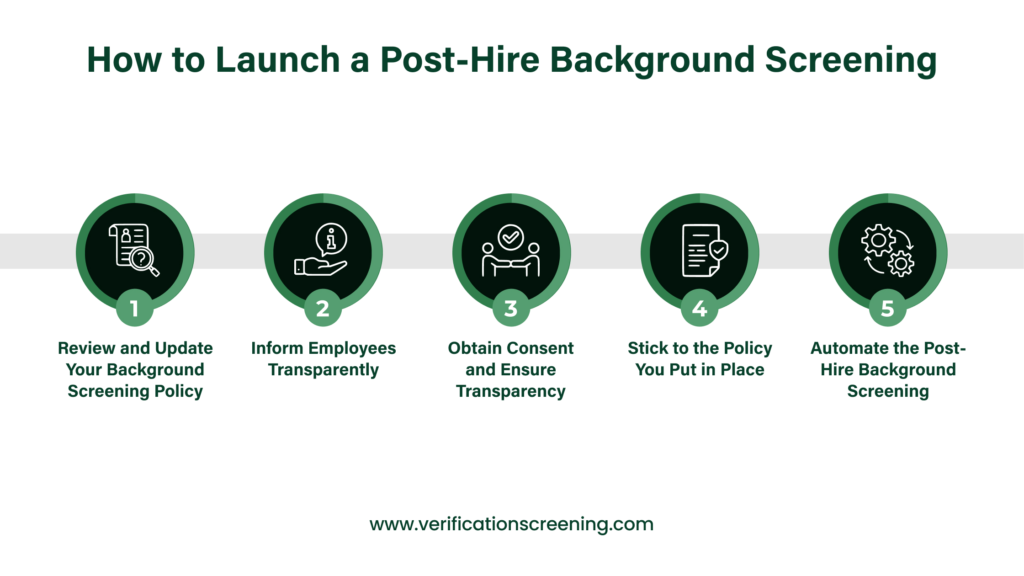
A well-run post-hire screening program doesn’t just happen—it’s built with intention, consistency, and legal oversight. If you’re considering implementing or refining a process, these five steps can help set the foundation for a fair and effective program.
Step 1: Review and Update Your Background Screening Policy
Your existing policy likely covers pre-employment screening, but it needs to account for post-hire searches as well. That means outlining what will be reviewed, when, how often, and who is covered. A sound policy includes:
- The types of screenings conducted after hire (e.g., criminal records, civil search, etc.)
- A schedule, whether annual, quarterly, or tied to anniversary dates
- A clear statement that the policy applies consistently to all employees
- A note encouraging employees to report issues that could surface during a search, proactively
Step 2: Inform Employees Transparently
Your background screening policy should never catch employees off guard. A strong program begins with transparency, which means communicating with current team members and new hires.
Start by explaining the why. Reinforce that post-hire searches are not about distrust but maintaining a safe, high-performing workplace. Clarify how the policy protects the company, customers, and employees.
Be specific about what will be reviewed, how often searches occur, and who they can contact with questions. Encourage employees to proactively share any relevant changes to their records, rather than waiting for an issue to surface in a report.
When onboarding new employees, set the expectation from day one. Include details about your post-hire screening schedule in the offer or onboarding materials. The goal is to build trust early by keeping the process consistent and predictable.
And don’t make it a one-time conversation. Keep communication ongoing. Employees are more likely to engage with and support the process when they understand how it works and why it matters.
Step 3: Obtain Consent and Ensure Transparency
Post-hire background screening requires written authorization from the employee. It’s important to clearly communicate the purpose of these searches and the types of information that may be reviewed. Let employees know how background search results are processed and how they can provide additional context or clarification if needed.
Transparency helps foster trust and supports internal consistency. Be sure your process is clearly outlined and applied in a uniform way across your organization.
Step 4: Stick to the Policy You Put in Place
A screening policy is only effective when it’s consistently followed. If your policy states that background searches will be conducted annually, then annual searches must be completed without exception. Skipping a round or making ad hoc decisions undermines the credibility of the entire program.
If a background search reveals something that triggers review, follow the process you’ve outlined. That includes documenting the findings, consulting legal guidance if needed, and making decisions in alignment with company standards, not based on emotion or assumptions.
Consistency protects your business, reinforces trust with your employees, and strengthens the overall integrity of your screening program.
Step 5: Automate the Post-Hire Background Screening
A well-designed screening policy only works if it’s sustainable. Manually running searches and tracking timelines can quickly overwhelm internal teams, especially when juggling ongoing hiring and daily operations.
Partnering with a trusted background screening provider like Verification Screening Solutions (VSS) lets your team offload the heavy lifting while maintaining consistency. VSS gives you visibility into your workforce without adding an administrative burden. With automated reminders and centralized reporting, your team can stay proactive, not reactive.
Take Control of Employee Safety with Post-Hire Screening Solutions
At Verification Screening Solutions, we help you safeguard your business by providing fast and reliable post-hire background searches that give you the confidence to make informed decisions. Whether you’re streamlining your hiring process or keeping up with regulatory requirements, we’re here to support your needs.
Our Services include:
- County-Level Criminal Search
- Statewide Criminal Search
- Federal Criminal Search
- Multi-State Criminal Search
- Motor Vehicle Report (MVR)
- Sex Offender Search
- Federal Civil Search
- County-Level Civil Search
- SSN Trace
- Employment Verification
- Education Verification
- Fingerprinting
Let’s discuss how we can help you set up a seamless post-hire screening program.
Frequently Asked Question
1. What types of businesses typically conduct background searches after someone is hired?
Industries with high standards for safety and trust, such as healthcare, transportation, finance, childcare, education, and senior care, are more likely to include ongoing background searches as part of their employee risk management strategy.