
About 92% of employers use criminal background checks for some or all job openings. But even with that level of use, many screening programs leave critical gaps, mainly when they rely solely on national or statewide databases.
The problem isn’t that checks aren’t happening. It’s that many employers assume those checks are comprehensive. In reality, national databases often lack recent or locally filed cases because they depend on third-party data feeds that may be incomplete, delayed, or inconsistent.
This creates a false sense of security. A candidate may appear straightforward on paper, but county-level records may reveal recent charges, unresolved cases, or local convictions that have not been reported in the broader system. Such oversight can lead to significant consequences in high-trust industries.
Why County-Level Searches Matter More in Certain Fields?
Every industry faces some level of hiring risk, but in certain fields, that risk carries greater weight. When employees interact directly with the public, handle sensitive information, or manage valuable assets, even a single oversight in the screening process can result in operational disruption, financial loss, or reputational harm.
That’s where county-level criminal searches provide a measurable advantage. Here’s why county-level searches play a critical role in high-risk sectors:
- Recent charges often appear in county records before reaching broader databases.
- Case outcomes such as dismissals, convictions, or sentencing are typically recorded first at the county level.
- Cases involving misdemeanors or probation violations are frequently handled only in local courts.
- Local courthouse records offer more apparent timelines and more complete case histories.
- Screening depth can be tailored more effectively when supported by jurisdiction-level data.
When the role demands greater scrutiny, county-level searches offer the level of detail required to make informed screening decisions.
Top Industries That Rely on County-Level Searches
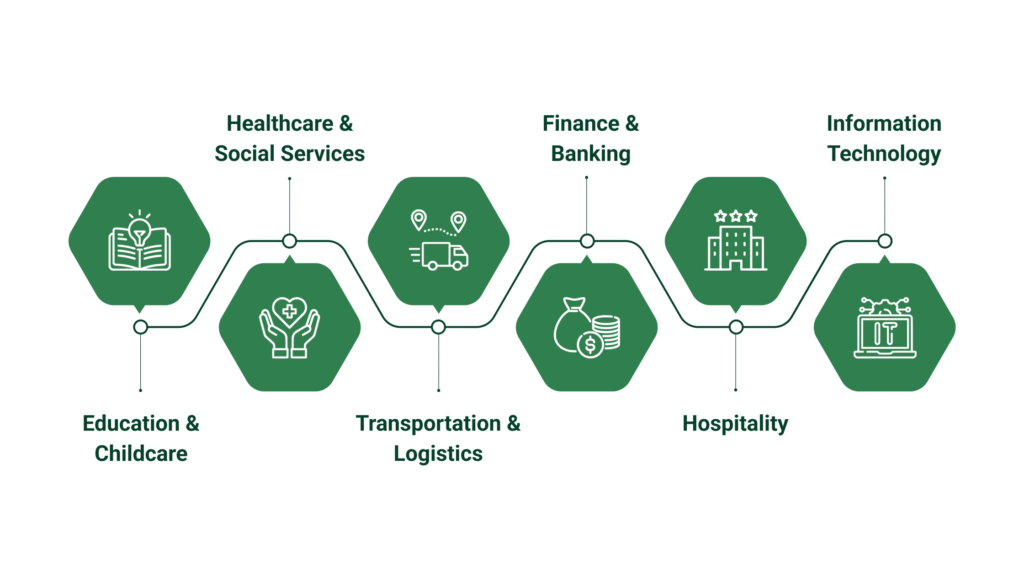
Understanding the value of county-level searches is one part of the equation. The next is knowing where they matter most.
1. Education & Childcare
Schools, tutoring centres, daycare providers, and youth programs all share one common responsibility: protecting children. When hiring teachers, aides, coaches, or volunteers, employers must take extra care to ensure that every candidate has undergone thorough screening.
County-level criminal searches are essential in the education sector because many cases that employers may need to review are handled at the county level. Misdemeanors involving inappropriate conduct, harassment, assault, or endangerment may not appear in national databases, particularly if they were resolved recently or remain pending in a county court.
In the education and childcare sector, county-level criminal searches provide clarity on case outcomes. Knowing whether a charge was dismissed, reduced, or resulted in sentencing is critical in roles where trust and child safety are paramount.
For institutions entrusted with child supervision and education, county-level screening helps reinforce a commitment to diligence by ensuring that background checks extend to the local courthouse.
2. Healthcare & Social Services
Healthcare employers operate in high-trust environments where staff interact with patients, handle medications, and access private medical information. Roles range from frontline caregivers and administrative staff to facility maintenance and transport, each with varying levels of access and responsibility.
County-level criminal searches are particularly valuable in this field because healthcare-related offenses, such as patient neglect or theft of controlled substances, are often prosecuted at the local level. These records may never reach national databases or may take months to appear, creating a critical gap if county checks are skipped.
Timeliness also matters. A pending charge involving violence or prescription fraud may not appear in broader checks, but could already be recorded in the county court system. In a clinical setting, delays in that information can translate into real-world risk for patients and staff.
Common offenses identified through county-level searches include:
- Theft or diversion of controlled substances
- Assault or abuse in patient-care environments
- Prescription fraud
- Neglect or misconduct cases filed locally
For hospitals, clinics, nursing homes, and private practices, adding county-level searches helps ensure that screening programs reflect the level of access and accountability required across healthcare roles.
3. Transportation & Logistics
In transportation and logistics, employees often operate independently, whether driving commercial vehicles, handling warehouse inventory, or managing distribution hubs. These roles carry responsibility for safety, time-sensitive deliveries, and high-value goods.
Relying on surface-level background checks in this industry can leave employers exposed to incidents that originate at the local level. Offenses like driving under the influence, cargo theft, or misconduct during previous employment are often filed in county courts and may not appear in broader systems for weeks or months, if at all.
With so much movement across jurisdictions, county-level checks provide a clearer picture of a candidate’s recent history, especially for individuals who have worked in multiple regions over a short period.
For companies managing drivers, fleets, or warehouse teams, deeper screening at the county level supports more informed hiring in an environment where split-second decisions and frontline trust are part of daily operations.
4. Finance & Banking
Employees in the finance and banking sector often handle client funds, access confidential financial data, and make decisions that can carry regulatory or reputational weight for the institution.
Even minor offenses involving fraud, embezzlement, or financial misconduct are highly relevant in this environment. Many of these cases are filed at the county level, particularly those involving non-violent financial crimes, and may never be reflected in national databases until well after the fact.
Candidates with prior offenses may appear clear in broader screenings, while unresolved charges or prior convictions sit in local records. For employers responsible for client assets or regulatory compliance, that’s a risk that can’t be ignored.
Common roles that require high levels of trust and financial accountability include:
- Bank tellers and branch managers
- Loan officers and underwriters
- Financial analysts and advisors
- Accountants, controllers, and internal auditors
- Compliance officers and risk managers
5. Hospitality
Employees in the hospitality industry are frequently placed in environments that demand trust, discretion, and professionalism, often without direct supervision.
When work is performed in guest rooms, private residences, or customer spaces, the hiring risks shift. Employers must be confident that the individuals representing their brand can be trusted in proximity to personal property, clients, and, at times, vulnerable individuals.
Missed information during the screening process, especially regarding prior conduct or local offenses, can impact customer safety, company reputation, and liability exposure.
Typical roles with unsupervised or customer-facing responsibilities include:
- Housekeepers, valets, and front desk staff
- Maintenance technicians and HVAC installers
- Residential cleaning and pest control teams
- On-site event and catering staff
In service-based businesses where customer interaction is central, background checks must reflect the level of access and responsibility each role entails.
6. Information Technology
Information Technology roles often involve high-level access to internal systems, sensitive data, and critical infrastructure. IT professionals manage everything from user permissions and cloud architecture to customer platforms and incident response protocols. That level of access comes with heightened hiring risk.
Roles involving digital trust demand more than surface-level screening. Cases involving misuse of systems or unauthorized access may be prosecuted at the county level and overlooked in broader databases. Without visibility into these records, businesses face exposure to insider threats, operational disruption, or regulatory scrutiny.
Positions commonly requiring deeper screening include:
- Network engineers and system administrators
- DevOps and infrastructure specialists
- Software developers with access to production environments
- Helpdesk teams managing login credentials and endpoint access
- Cybersecurity analysts overseeing digital security and risk
Why County Searches Should Be Standard in Screening Packages?
Below are four reasons county-level checks should be part of every high-trust screening package:
- Broader Checks Leave Gaps
County-level searches help fill the gaps that broader criminal databases often leave behind by offering more current, location-specific records tied directly to where charges are filed.
- County Records Are More Timely
These searches offer the most current and location-specific view of a candidate’s criminal history.
- Simplicity Without Sacrificing Accuracy
Adding county checks doesn’t complicate your process. It ensures decisions are based on complete, reliable information.
- Consistency Across Roles
Standardizing county-level checks brings uniformity to your hiring process and reduces the risk of inconsistencies.
Support High-Risk Roles with Background Screening from Verification Screening Solutions

Background checks are only as strong as the data behind them. In high-stakes industries, relying solely on broad databases can lead to gaps that pose real operational risks. County-level criminal searches provide the additional depth needed to make informed hiring decisions, especially when roles involve trust, access, or accountability.
Verification Screening Solutions offers a full range of background check services tailored to your hiring needs, including:
Contact us today to learn how we can assist with your background screening needs