
Hiring moves fast. Candidates expect quick decisions, and healthcare and staffing leaders know that every day of delay can mean losing someone to a competitor. Yet, when it comes to county-level background checks, the pace isn’t always in your control.
The United States has over 3,100 counties and county equivalents, and each one handles records differently. Some counties deliver results almost instantly with digital systems. Others still rely on manual courthouse lookups, where a clerk may literally need to pull files from a cabinet. That’s where the timeline stretches, not by hours, but by days.
If you’ve ever wondered why one candidate clears quickly while another stalls for a week, the answer lies in these county-level differences. The challenge is real, but it’s not random. There are patterns behind why some counties return faster results than others, and strategies you can use to work around those delays without losing momentum.
Major Factors That Influence County-Level Turnaround Times
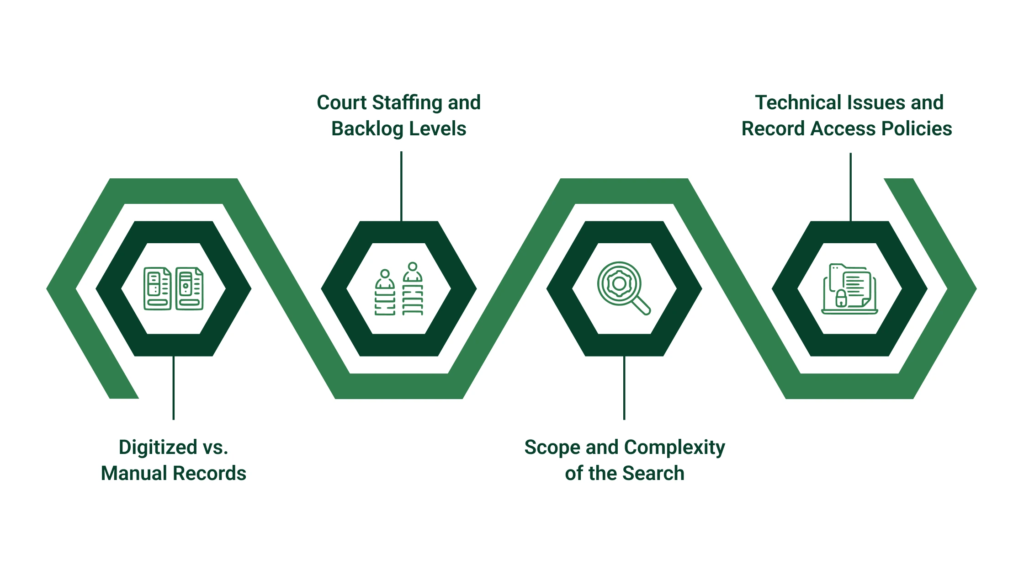
The speed of county background checks depends on a handful of practical factors, everything from how records are stored to how courts handle requests. Understanding these variables makes it easier to anticipate delays and plan around them.
1. Digitized vs. Manual Records
One of the biggest factors that determines how quickly a county returns results is the way records are stored and accessed. Counties with modern, digitized systems can process searches in hours, while those relying on manual courthouse methods may take days or longer.
How technology impacts turnaround time:
- Digitized systems – Records are available online or through electronic court portals, allowing near-instant searches and faster reporting.
- Manual processes – Clerks must physically locate files, pull case folders, and confirm results by hand. This creates bottlenecks when courts are busy or understaffed.
- Hybrid models – Some counties digitize recent cases but keep older records archived manually, adding complexity if a search goes back several years.
Counties that invest in digitization consistently deliver quicker turnaround times. In contrast, manual record systems depend heavily on staffing levels, courthouse hours, and backlogs, all factors that can delay results beyond employer expectations.
2. Court Staffing and Backlog Levels
Even in counties with efficient systems, the availability of staff plays a major role in how fast background checks are processed. Courts that are well-staffed with clerks can handle requests promptly, but those operating with fewer resources often face delays, especially when caseloads are high.
Importance of staffing and backlog:
- Understaffed courts – Limited clerk availability means searches wait in line until staff can manually pull or verify records.
- High caseloads – Counties managing heavy trial schedules or administrative backlogs may deprioritize record requests.
- Seasonal fluctuations – Hiring surges, combined with holidays or peak court seasons, can extend turnaround times further.
- Post-pandemic challenges – Some counties are still working through case backlogs created when courts were closed or operating at reduced capacity.
When staffing is tight, even straightforward searches can stretch into several business days. For employers trying to fill critical roles, these bottlenecks create uncertainty, especially if multiple counties in a candidate’s history rely heavily on manual labor to clear requests.
3. Scope and Complexity of the Search
Not every county search is the same. The broader and more complex the request, the longer it can take for results to come back. A simple, single-county check may clear quickly, while multi-county searches or requests that cover long timelines often require more time and resources.
Factors that add complexity include:
- Multi-county checks – Candidates who have lived, worked, or studied in multiple counties require multiple records requests, each with its own turnaround timeline.
- Older records – Recent cases are easier to access, but older files may be archived in separate systems or off-site storage, which can require more time to retrieve.
- Expanded date ranges – The longer the timeframe covered, the more records clerks must review, which may increase the workload and turnaround time.
Each added layer of scope can increase the chance of delays. Employers often notice this when screening candidates with long work histories or those who have relocated multiple times. Anticipating longer turnaround times in such cases helps recruiters set realistic expectations and avoid hiring stalls.
4. Technical Issues and Record Access Policies
Even in counties with digitized systems, technology and policy can create unexpected delays. Unlike manual backlogs, these issues often appear without warning, leaving employers uncertain about when results will be available.
Examples of technical and policy-driven delays:
- System outages – Online portals may go down for maintenance or unexpected technical failures, halting searches until access is restored.
- Data redaction rules – Some counties mask details such as dates of birth or identifiers to protect privacy. This requires additional steps to confirm records and slows turnaround.
- Restricted access – Certain jurisdictions require in-person requests or limit who can access court systems, forcing searches through narrower channels.
- Update frequency – Counties that only refresh their databases weekly or monthly create built-in delays compared to those updating daily.
For employers, these issues are the hardest to predict because they depend entirely on the policies and technical readiness of individual counties. Building in extra time for counties known to have restrictive rules, or working with providers that maintain courthouse relationships, can help minimize surprises.
Employer Strategies for Smoother and Faster Turnaround

While employers can’t control how each county manages its records, there are proven ways to work around delays and reduce the impact on hiring timelines. By approaching county-level searches strategically, organizations can gain faster results, better consistency, and fewer surprises in the screening process.
Utilize SSN Trace for Targeted Searches
An SSN trace gives employers a roadmap of where a candidate has lived, worked, or studied. Using that address history to guide county searches ensures screening is focused only on relevant jurisdictions rather than casting a wide, inefficient net.
This targeting reduces wasted time spent checking counties where no records would reasonably exist. It also minimizes the risk of missing a jurisdiction tied to the candidate’s actual history.
By starting with SSN trace data, employers can align their search scope to what matters most, improving both the efficiency and completeness of the background check process.
Prioritize Digitized Counties Where Possible
Counties that maintain digitized records can process searches quickly, often within hours, compared to counties where manual clerk work is still the norm. Employers can take advantage of this by prioritizing digitized counties first. Results from these jurisdictions provide faster updates, giving recruiters and hiring managers something to move forward with while slower counties continue processing in the background.
This staged approach helps organizations maintain momentum in hiring pipelines, even when some counties are slower. By recognizing the advantages of digitization, employers can plan more efficient timelines and prevent the entire process from being held back by a single manual jurisdiction.
Prepare Candidate Data Early
Delays often begin with the information submitted. Errors in names, missing aliases, or incorrect dates of birth can cause searches to be delayed or require manual review. Employers can prevent this by collecting accurate candidate data upfront.
Asking for a complete address history, clarifying alternative names, and confirming identifiers ensures the information provided to county courts matches their records. Preparing candidate data thoroughly also helps avoid re-requests that add days to the process.
In high-volume hiring environments, even small errors can quickly turn into delays. Setting expectations with candidates early is one of the simplest ways to reduce delays.
Work With Providers Experienced in County Systems
Every county has its own nuances, whether it be different access policies, staffing levels, or turnaround expectations. Providers with deep experience in navigating these differences can make the process far smoother for employers.
Experienced providers often have direct courthouse connections, awareness of local backlog conditions, and established workflows for dealing with technical or access-related challenges.
Instead of HR teams having to manage these inconsistencies on their own, a trusted screening partner ensures that results move through more efficiently and with fewer surprises. For employers, this means greater visibility, predictable timelines, and less time spent troubleshooting delays that are outside their control.
Streamline County Searches with Quick and Data-Driven Results from Verification Screening Solutions
County turnaround times may vary, but your hiring pipeline doesn’t have to slow down. Verification Screening Solutions (VSS) helps employers navigate jurisdictional differences with efficient, targeted workflows planned to keep results timely and accurate.
Our services include:
Want to see how VSS can simplify county-level background checks and reduce hiring delays? Discuss faster, smarter screening strategies built for your team.